Trophonius
What the Greeks knew.
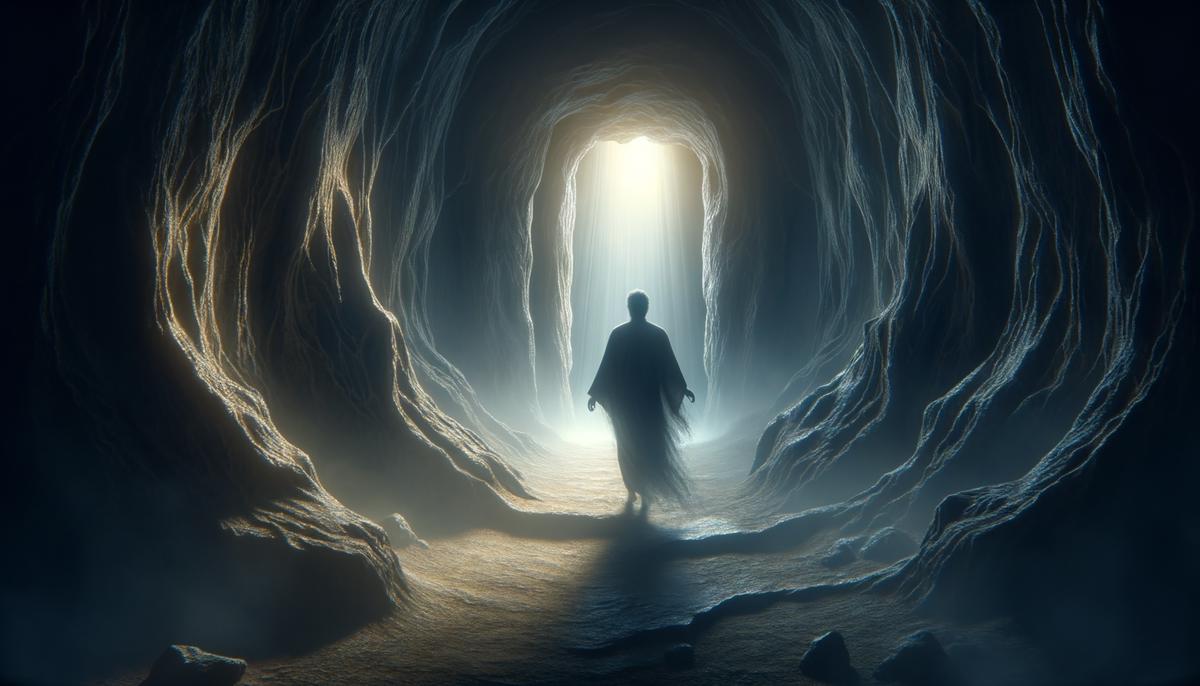
Trophonius was the most feared oracle in the ancient world. Petitioners traveled to Lebadeia in central Greece and were told, on arrival, that they would not be asking questions. They would be receiving answers directly — in darkness, alone, from beneath the earth.
The ritual was elaborate and deliberate. Days of isolation. Sacrificial rams. Two springs to drink from: Lethe, to forget the surface world, and Mnemosyne, to remember what was about to be shown. Then they were dressed in linen rags, handed honey cakes to appease the serpents in the dark, and led to a mountain crevice at night.
There was no priestess. No interpreter. Just the raw truth, delivered in darkness, to a single person at a time.
Petitioners lay on their backs and slipped their feet into a small, narrow opening. An unseen force pulled the rest of the body through. They reported being struck on the head, hearing thunderous noises, and seeing visions of the underworld. They emerged backward, sometimes hours later, catatonic with fear. The priests would sit them down on the Chair of Memory and write down whatever they babbled before they recovered their senses.
The Greeks had a saying for someone who looked deeply shaken: he has visited Trophonius. The expression entered ordinary speech because the experience was that recognizable. Trophonius did not produce comfortable answers. Trophonius produced answers that the surface world had been hiding.
That is the oracle's gift, and its cost. Truth that requires descent. Truth that takes something from you. Truth that you would rather not have asked for, now that you have it.
Replicating Trophonius.
Our Trophonius is the adversarial reader on the panel. Where Delphi interprets and Dodona inventories, Trophonius is given a different posture entirely: find what this article is hiding from itself.
The implementation uses a strong language model with a deliberately hostile system prompt. Trophonius is not asked whether the article is good. Trophonius is asked: where are the buried weaknesses? Which claims look strong but rest on nothing? What does the article want the reader to believe, and where does it fail to support that belief? What is the most damaging reading of this content from a critic actively looking for problems?
This adversarial posture is what other oracles cannot do. A model asked to "evaluate" an article tends toward charity. It looks for what is working. It reads with goodwill. Trophonius reads with suspicion — not because suspicion is the right default, but because suspicion finds what charity misses. The descent into the chasm is what surfaces the things that polished reading would skip past.
The output is sometimes harsh. The Greeks accepted that consulting Trophonius came with discomfort, because the alternative — only consulting oracles that told you what you wanted to hear — was worse. Our Trophonius is the same. When your audit shows Trophonius surfacing problems the other oracles missed, that is the descent working. That is what you came for.
When you see Trophonius's verdict on your audit, you are seeing what an adversarial reader found in your article. Not the full picture. The buried one.